
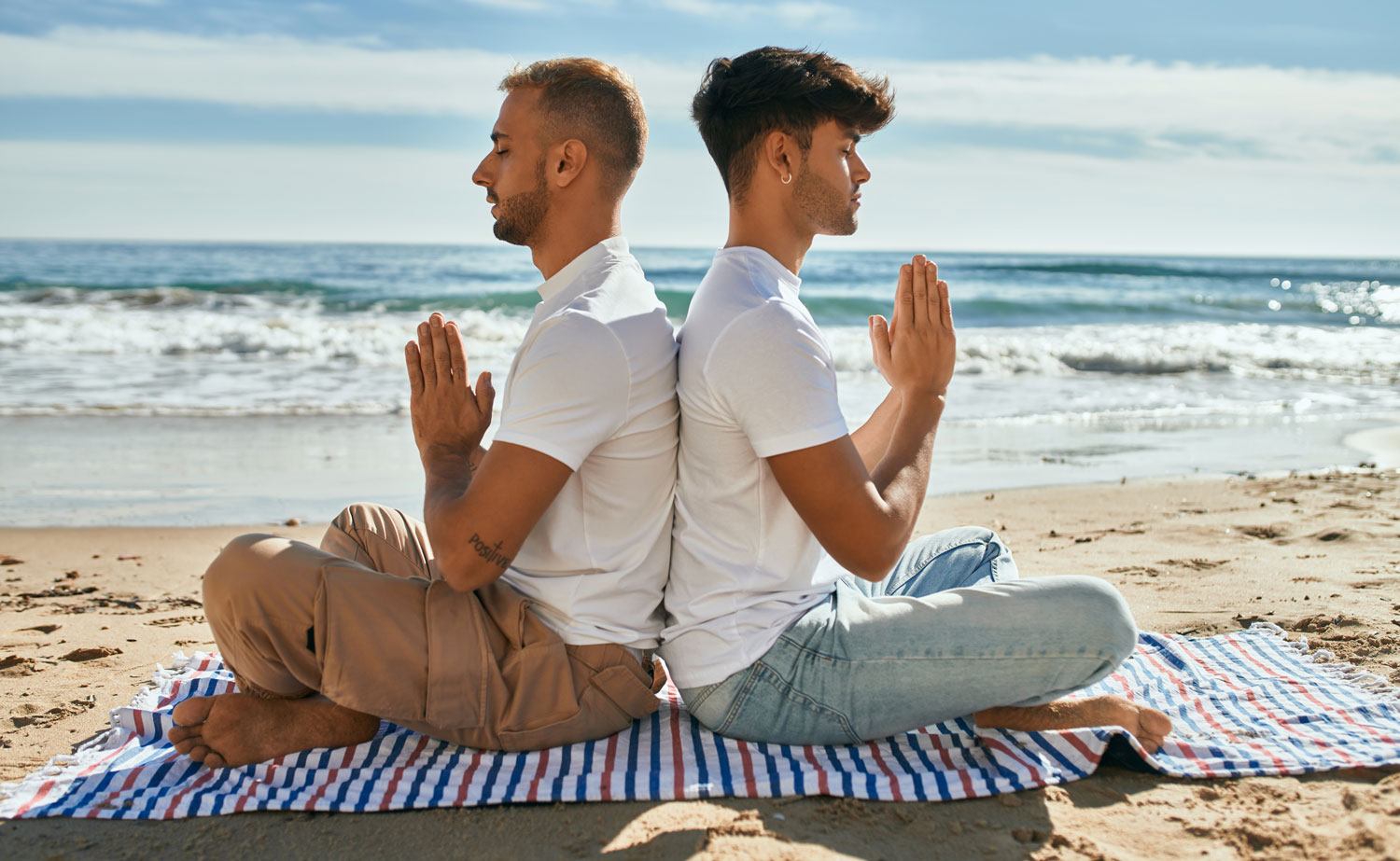
With millions of people rolling out their mats, research shows yoga isn’t just hype—it’s a path to calm, confidence and maybe even better chemistry in the bedroom
In the United States, about 36 million adults regularly practice yoga. About 1 in 3 Americans have tried yoga at least once. Exercise trends come and go, but after 2,200 years, yoga is more popular than ever.
Many people attribute yoga’s increased popularity to renewed interest in spiritual enlightenment; others are interested in feeling calmer and happier, while still others go for better sex (yes, really).
Yoga classes — of all shapes and sizes — are trendy, but is there a scientific basis for their popularity?
Recent studies, including many supported by the National Center for Complementary and Alternative Medicine (an arm of the National Institutes of Health), have demonstrated that regular yoga practice can improve cardiovascular risk factors like elevated blood pressure, blood sugar, blood cholesterol and clot-inducing fibrinogen, and it can raise blood levels of protective antioxidants.
Yoga was shown to improve balance and, by enhancing blood flow and the production of growth factors, yoga can counteract the deterioration of spinal discs. Possibly through its stimulation of the vagus nerve, yoga appears to counter inflammation throughout the body and may reduce the effects of arthritis.
Another benefit of yoga is its potential to revitalize a person’s sex life. These yoga poses are recommended specifically for sexual health:
- Half Spinal Twist: Improves spinal flexibility and digestion, potentially enhancing sexual function.
- Butterfly Pose: Opens the hips and groin, potentially improving flexibility and blood flow to the genital area.
- Cobra Pose: Strengthens the back and core muscles, promoting blood flow to the pelvic region.
- Boat Pose: Strengthens the core and pelvic muscles.
- Bridge Pose: Strengthens the pelvic floor and improves circulation in the pelvic area.
- Triangle Pose: Improves balance and flexibility, strengthening the pelvic floor.
Yoga may even help with hangovers: “Yoga reduces stress and has health benefits,” said Dr. Debbie L. Cohen, a kidney specialist at the University of Pennsylvania, who is studying yoga as an alternative to medication to lower high blood pressure. “Yoga can make you feel better,” she said, recommending yoga with an emphasis on meditation and breathing exercises to help ease your hangover.
Whatever your motivation may be — to reduce stress, tone the body, improve your mood — there is a yoga class (online or in person) for you. One of my San Diego friends takes an online yoga class in Los Angeles. Another friend in Palm Springs takes a 6 a.m. online class with a yoga teacher in India!
After taking hundreds of yoga classes over the past 54 years (I started in college when I was 18), here is my experience of some of the more popular types of yoga:
Hatha: an umbrella term that covers a number of disciplines. Expect a reasonable amount of chanting, a moderately quick series of poses and a long relaxation period at the end of class.
Bikram: a set series of 26 poses, mostly forward-bends and spinal twists, per 90-minute class. The classroom temperature is set at a minimum of 100 degrees to warm the muscles for easier stretching.
Sivananda: classes typically start with 10 minutes of chanting and end with a 15-minute relaxation period, but the middle is a vigorous physical workout.
Vinyasa: a long, fluid, fast series of poses with chanting, headstands, forearm stands and handstands.
Kundalini: This is the most overtly spiritual type of yoga. Classes move slowly through gentle stretches, prolonged chants, and lots of breathing exercises focused on the energy force that exists at the base of the spine.
Iyengar: This is my personal favorite. Iyengar instructors focus on alignment through moving slowing and holding postures. When I was in a car accident, my Iyengar teacher created a routine for me that helped me heal from my injuries so fast that my doctor asked me how I did it.

There are many different kinds of yoga, and each has its devotees. Check them out and pick the one(s) that make you feel the best. Try online and in-person classes.
Be picky about teachers: If you don’t like the instructor, you won’t go to the class. Set yourself up to succeed and watch your anxiety go down and your sexual health will improve.
P.S. Yep, that’s me in the photo, practicing Iyengar yoga.
 Michael Kimmel, a California-licensed psychotherapist (LCSW 20738), operates a private practice in San Diego, offering telehealth services throughout the state of California. With over 25 years of counseling experience, he brings warmth, insight and a healthy sense of humor to his work. lifebeyondtherapy.com